Home Workouts: No Equipment Required To burn Calories.
Life moves fast these days. It’s hard to find time for the gym. But you don’t have to skip your fitness goals.You can maximize calories . No fancy equipment required. Just use your body weight to do home workouts.
These three simple home workouts target your main muscles. They build strength, improve your heart health, and boost overall fitness. Turn your living room into a gym. Get started today!
This 30-minute home workouts will help you in calories burning, body toning and strength building .All you need one mat, one water bottle and one towel during workout.
The Foundation (Warm-Up & Dynamic Stretching)
”Kickstart your session at home workouts with a 4-minute active warm-up designed to wake up your muscles, increase your heart rate, and get your body ready for action.”
The Goal: Every great home workout begins with a transition period. The goal here isn’t just to move, it’s to increase your “core temperature.
To get the most out of your home workouts, perform each of these for 45 seconds.
1. High Knees: (30 seconds) To get the heart rate up.
2. Arm Circles: (15 forward / 15 backward).
3. World’s Greatest Stretch: (5 reps per side).
4. Cat-Cow: (10 slow cycles).
5. Leg Swings: (15 swings per leg).
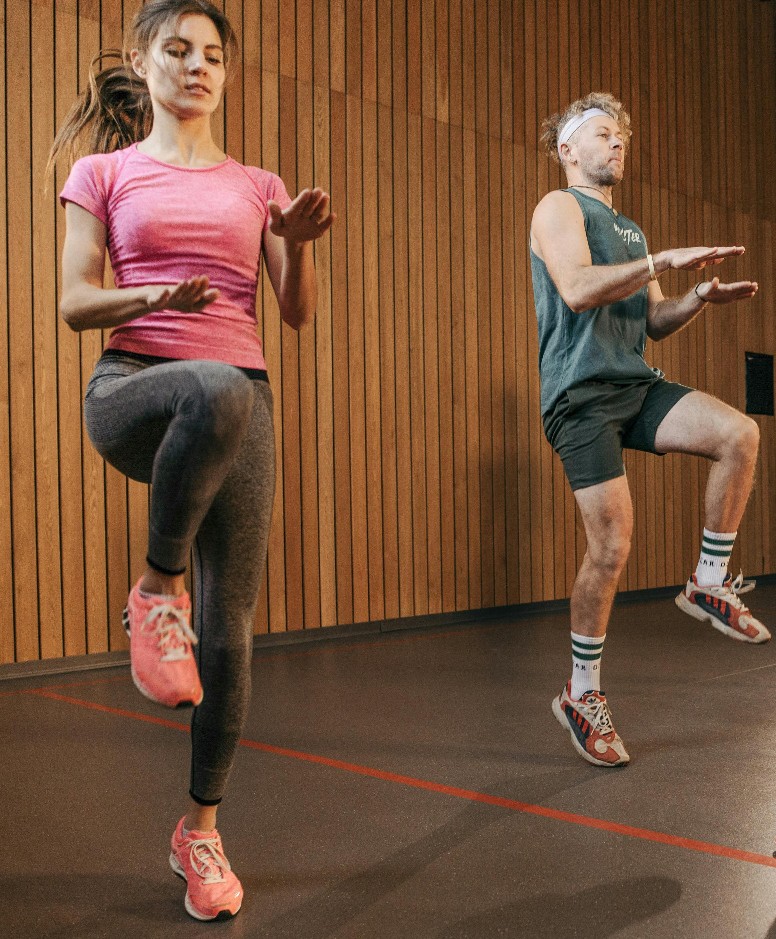
1. High Knees is a powerful cardio-intensive exercise that doubles as a dynamic warm-up. It effectively wakes up your lower body muscles, improves coordination, and gets your heart rate climbing quickly.
Engage Your Core: Keep your abs tight to help lift your knees and protect your lower back.
Don’t Lean Back: It’s common to lean away as you get tired. Focus on keeping your torso upright or slightly leaned forward.Land Softly: Avoid slamming your feet down. Imagine you are running on hot coals; keep your contact with the ground brief and quiet.
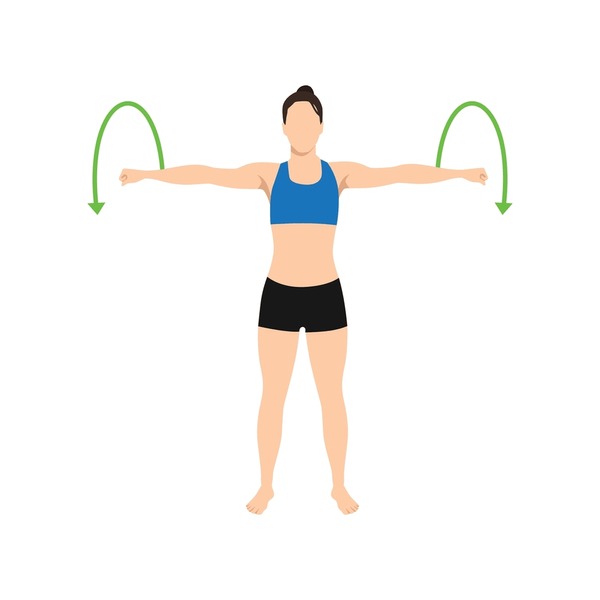
2. Arm Circles : Stand with feet shoulder-width apart. Extend your arms to the sides and make small circles, gradually making them larger until you are doing full rotations.
Example: Imagine you are painting large circles on two walls beside you with your fingertips.
3. The “World’s Greatest Stretch” (Lunge with Spinal Twist): Step forward into a deep lunge. Place your opposite hand on the floor and reach your other hand toward the ceiling, looking up at your palm.
Example: If your left leg is forward, your right hand is on the floor, and your left hand reaches for the sky.
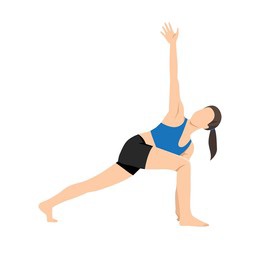
Lunge With Spinal Twist Exercise
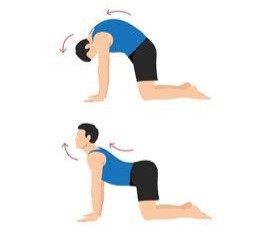
4. Cat-Cow Stretch: Get on all fours (hands and knees). Inhale as you arch your back and look up (Cow), exhale as you round your spine and tuck your chin to your chest (Cat).
Example : Think of your spine like a wave moving from your tailbone up to your neck.
5. Leg Swings (Front-to-Back and Side-to-Side): Hold onto a wall or chair for balance. Swing one leg forward and backward like a pendulum, then swing it across your body from left to right.
Example: Keep your torso still, let the movement come entirely from the hip socket.
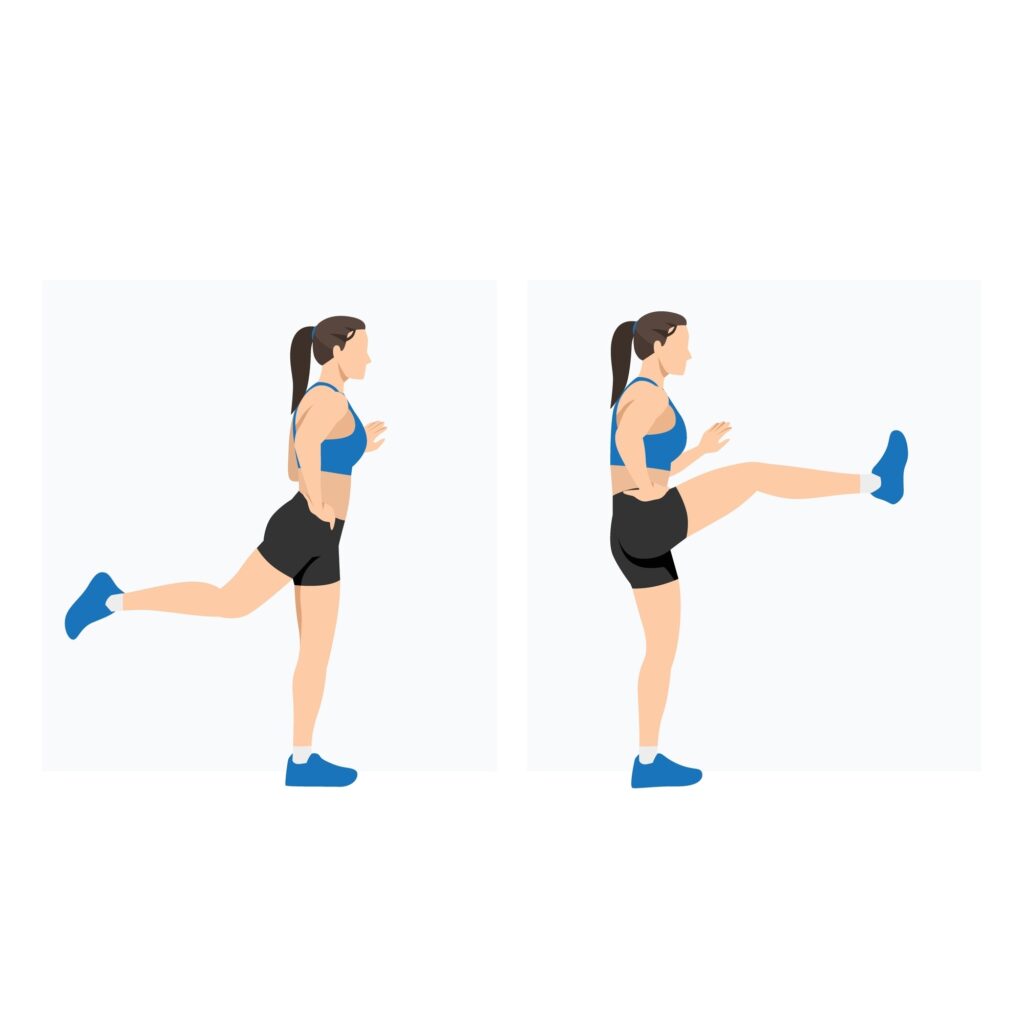
Leg Swings Exercise
Circuit 1: The Strength Foundation
Building a strong foundation involves mastering fundamental movements like squats and lunges, which can be easily done in your living room. You can further enhance your core stability and total-body power by incorporating push-ups and planks into your daily home workouts.
Focus: Building lean muscle in the legs, chest, and back at home workouts.
Instructions: Perform each exercise for 12–15 reps. Repeat the entire circuit 3 times.
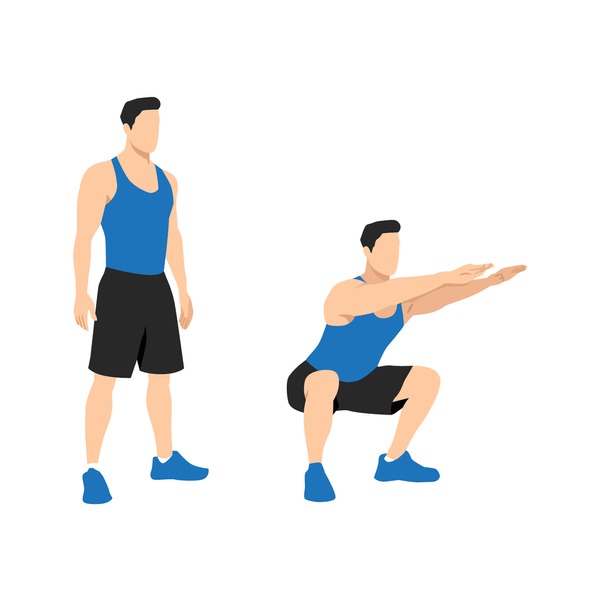
1. Air Squats
The Move: Stand with feet shoulder-width apart. Lower your hips back and down until your thighs are parallel to the floor. Drive back up through your heels.
The Detail: Keep your weight in your heels so your knees don’t move past your toes.
Example: “Imagine sitting back into an invisible chair while keeping your chest proud like a superhero.”
2. Standard Push-Ups
The Move: Start in a high plank. Lower your body until your chest nearly touches the floor, then push back up.
The Detail: Start in a high plank with hands slightly wider than shoulders, body straight from head to heels, lower your chest by bending elbows (about 90 degrees) while keeping core tight and elbows angled slightly back (around 45°), then push back up explosively to the start, maintaining a rigid line and engaging glutes and core throughout the movement. Focus on controlled movement and a straight body line (no sagging hips or arched back) for proper form.
Example: “Your body should move like a straight plank of wood; don’t let your hips sag toward the floor.”
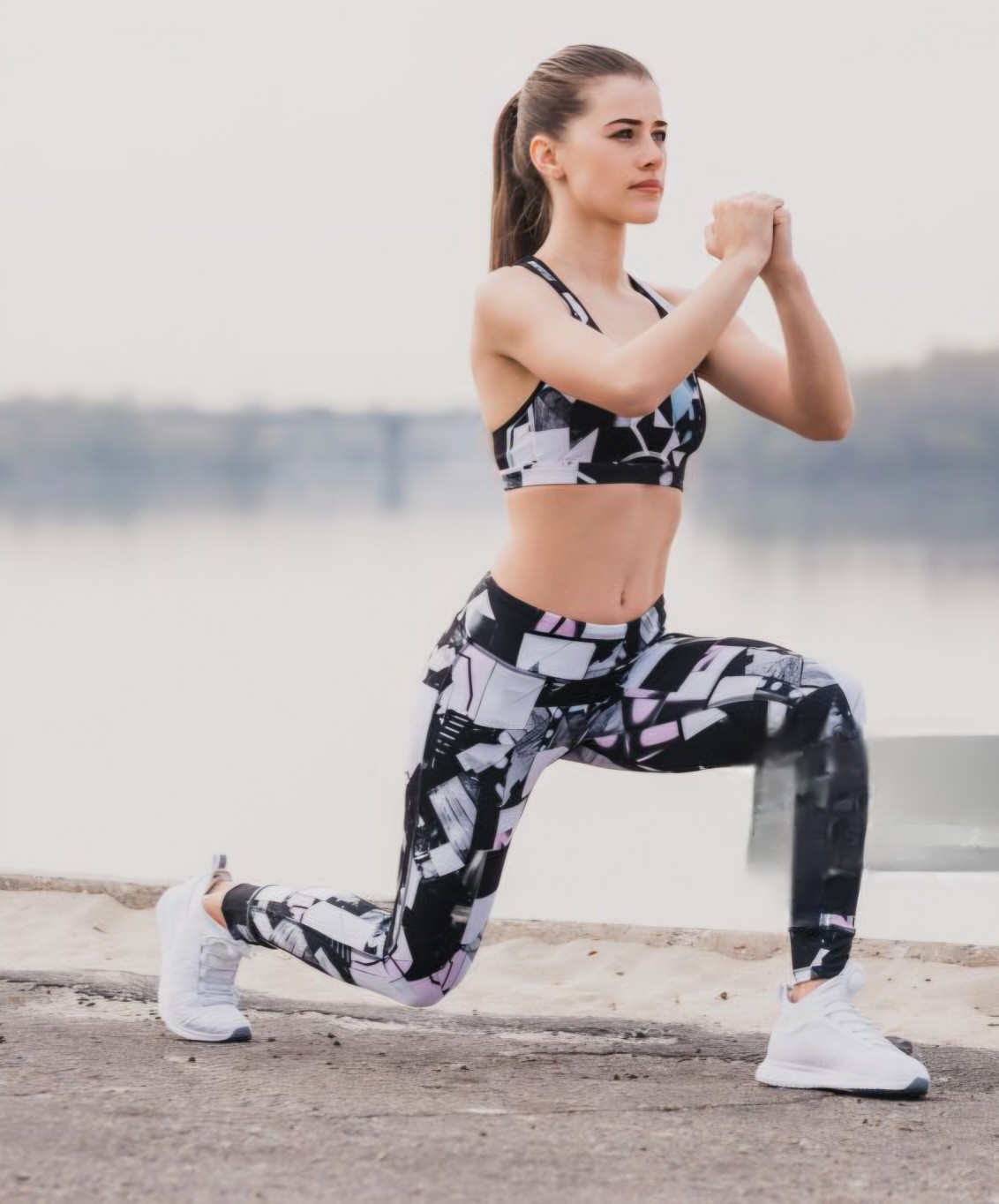
3. Walking Lunges
The Move: Take a big step forward and lower your back knee toward the ground. Both knees should form 90°angles. Step forward with the other leg.
The Detail: Keep your torso upright. Leaning too far forward puts unnecessary stress on the knee.
Example: “Think of your back knee as an elevator going straight down, not a train moving forward.”
Circuit 2: The Metabolic Burn (Cardio)
Boost your metabolic burn and cardiovascular health by performing high-energy home workouts like jumping jacks and burpees in quick successions. You can maximize calorie torching and endurance from your living room by integrating fast-paced mountain climbers and high knees into your circuit.
Focus : Fat burning and explosive power.
Instructions: Perform each for 45 seconds, followed by 15 seconds of rest. Repeat 3 times.
1. Mountain Climbers
The Move: In a plank position, drive your knees toward your chest one at a time as fast as possible.
The Detail: Keep your hips low. If your butt is high in the air, you lose the core engagement.
Example: “Imagine you are sprinting up a steep hill while keeping your hands glued to the ground.”

2. Burpees
The Move: Drop into a squat, kick your feet back into a plank, do a push-up (optional), jump your feet back in, and explode into a jump.
The Detail: This is the ultimate full-body move. Focus on a soft landing to protect your joints.
Example: “It’s a fluid motion: Drop, Plank, Jump, Reach for the sky!”
3. Skater Jumps
The Move: Leap sideways to the right, landing on your right foot while sweeping your left leg behind you. Repeat on the other side.
The Detail: Use your arms to create momentum and maintain balance.
Example: “Mimic the motion of an Olympic speed skater gliding across the ice.”
Circuit 3: The Core & Stability Finisher
This core and stability finisher is the perfect way to wrap up your session, ensuring every abdominal muscle is engaged for maximum definition. Incorporating these movements into your home workouts will build the foundational balance
Focus: Strengthening the abs, obliques, and lower back at home workouts.
Instructions: Hold/Perform each for 60 seconds. Repeat 2 times.
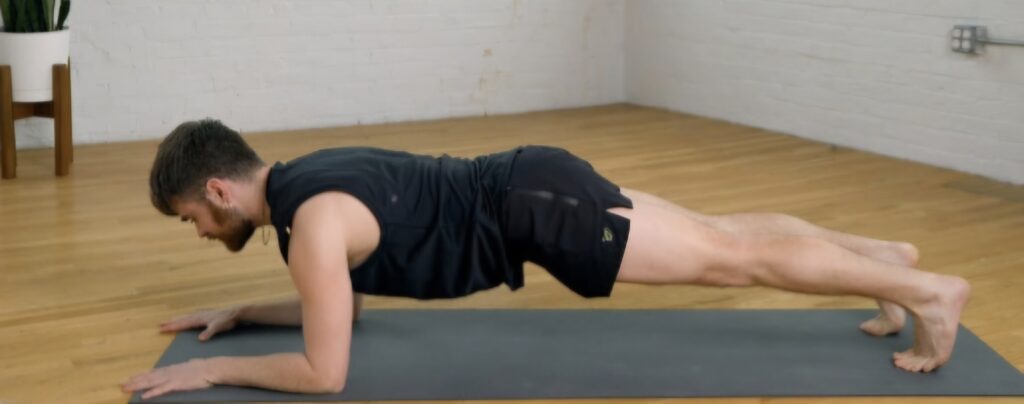
1. Forearm Plank
The Move: Rest on your forearms and toes. Keep your body in a perfectly straight line from head to heels.The
Detail: Squeeze your glutes and belly button toward your spine to engage the deep core.
Example: “Don’t hold your breath! Imagine a glass of water resting on your lower back that you can’t let spill.”
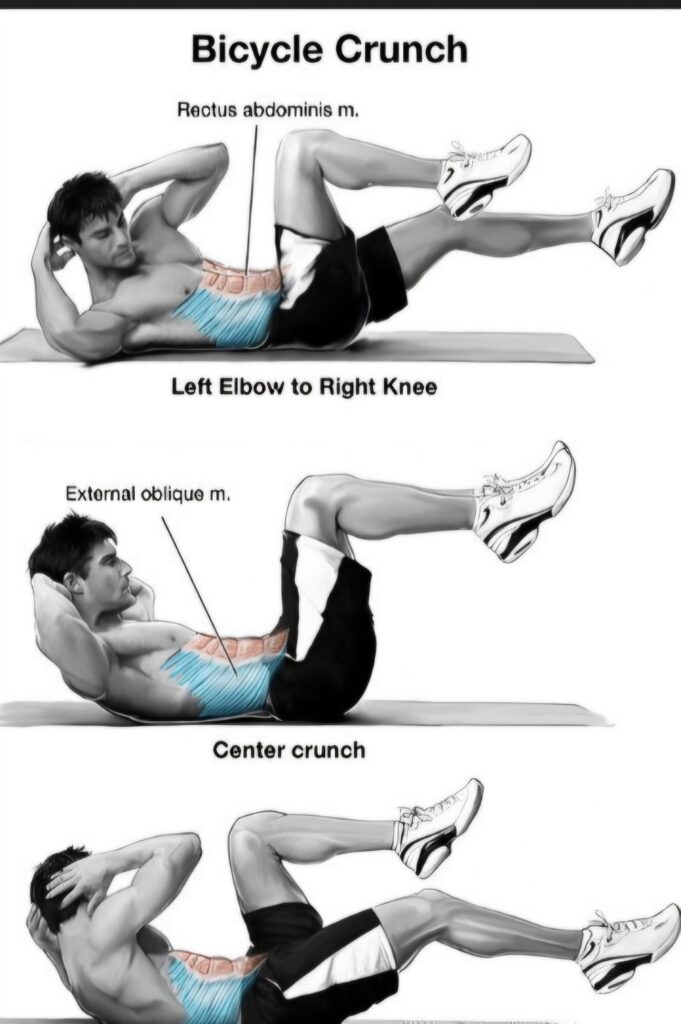
2. Bicycle Crunches
The Move: Lie on your back. Bring your opposite elbow toward your opposite knee while extending the other leg straight out.
The Detail: Don’t pull on your neck. Let your abs do the twisting.
Example: “Pedal your legs slowly as if you are riding a bike through thick mud, slow and controlled is harder than fast.”
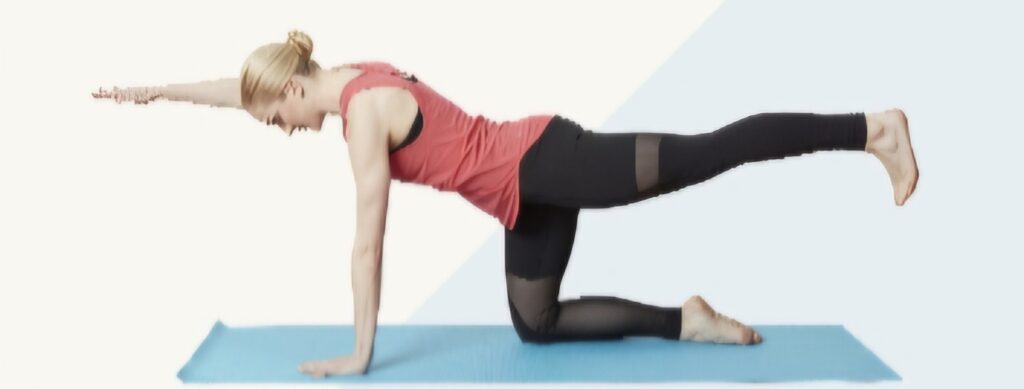
3. Bird-Dog
The Move: On all fours, extend your right arm forward and your left leg backward simultaneously. Hold, then switch.
The Detail: Focus on balance. Your back should remain as still as a table.
Example: “Reach for the wall in front of you and the wall behind you at the same time.”
Circuit 4 : The Power & Explosiveness Phase
This phase focuses on “Rate of Force Development”—training your nervous system to recruit muscle fibers as quickly as possible .This is what gives you “snap” in your movements in home workouts.
Goal: Increase speed, jump height, and reactive strength.
Intensity: High effort, but low repetitions to maintain maximum speed.
Rest: 60–90 seconds between circuits to allow the nervous system to recover.
1.Box Jumps
The Move: Lower body power
The Detail: Jump onto a stable platform, landing softly in a partial squat. Step down (don’t jump down) to protect knees.
Example: It’s not just about how high you can jump; it’s about how much force you can generate quickly and how well you can control your body in the air.
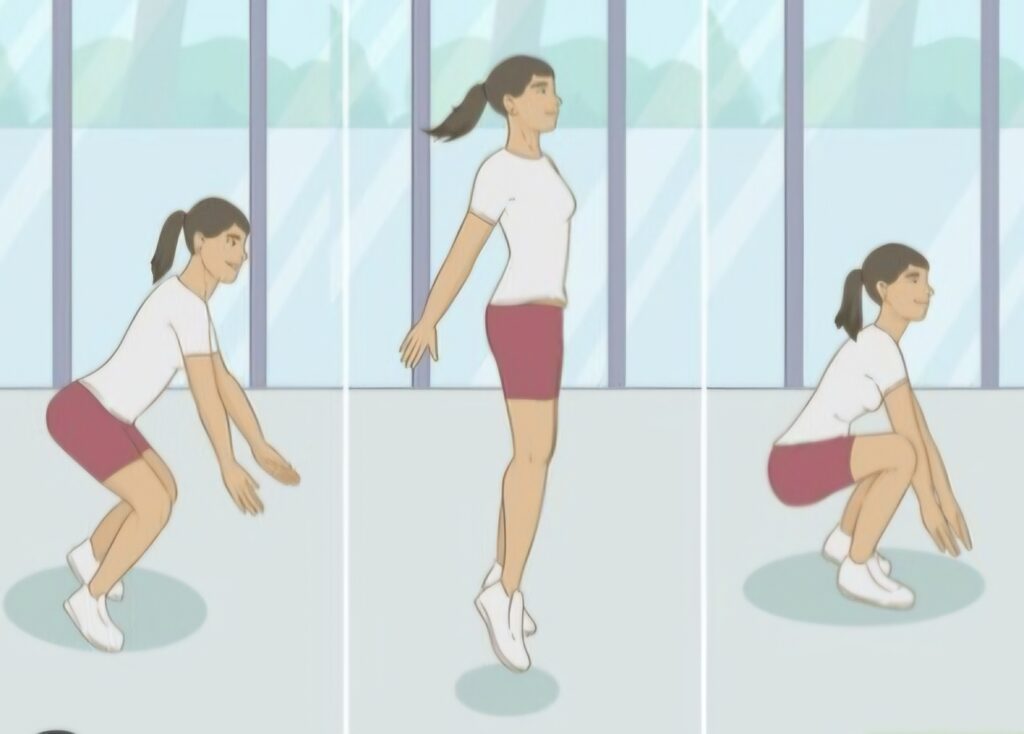
2. Squat Jumps:
The Move : Lower body home workouts
The Detail:
Level 1: The “Toes-Only” Jump (Beginner/Joint-Friendly) Perform the explosive squat, but instead of leaving the floor, just snap up onto your tiptoes (a calf raise). This builds the power without the impact on your knees.
Level 2: The Reset Jump (Intermediate) Instead of jumping continuously, land the jump, hold the squat for 2 seconds to stabilize, then stand up and reset. This focuses on stability over cardio.
Level 3: The Tuck Jump (Advanced) While in the air, pull your knees toward your chest. This requires significantly more core strength and explosive “snap.”
Home Safety Tip: If you are training on a hard floor (wood or tile), wear athletic shoes or use a yoga mat to dampen the impact. Avoid doing these in socks on slippery surfaces!
3. Broad Jumps :
The Move: Horizontal Power
The Detail: Jump forward for distance, focusing on a powerful hip extension and a controlled landing.”Stick” the landing without taking extra steps or falling forward.
At home workouts , it’s a high-impact move that requires about 6–8 feet of clear space.
Circuit 5: Upper Body Sculpt (No Equipment at home workouts)
You don’t need a gym membership or a rack of heavy dumbbells to achieve a toned, “sculpted” upper body. By utilizing your own body weight as resistance and manipulating angles, you can effectively target your chest, shoulders, back, and arms.
This sculpting routine focuses on time-under-tension—slowing down the movements to maximize muscle fiber engagement can be done at home workouts.
Focus: Defining the shoulders, triceps, and back using gravity and body weight.
Instructions: Perform each for 12–15 reps. Repeat 3 times.
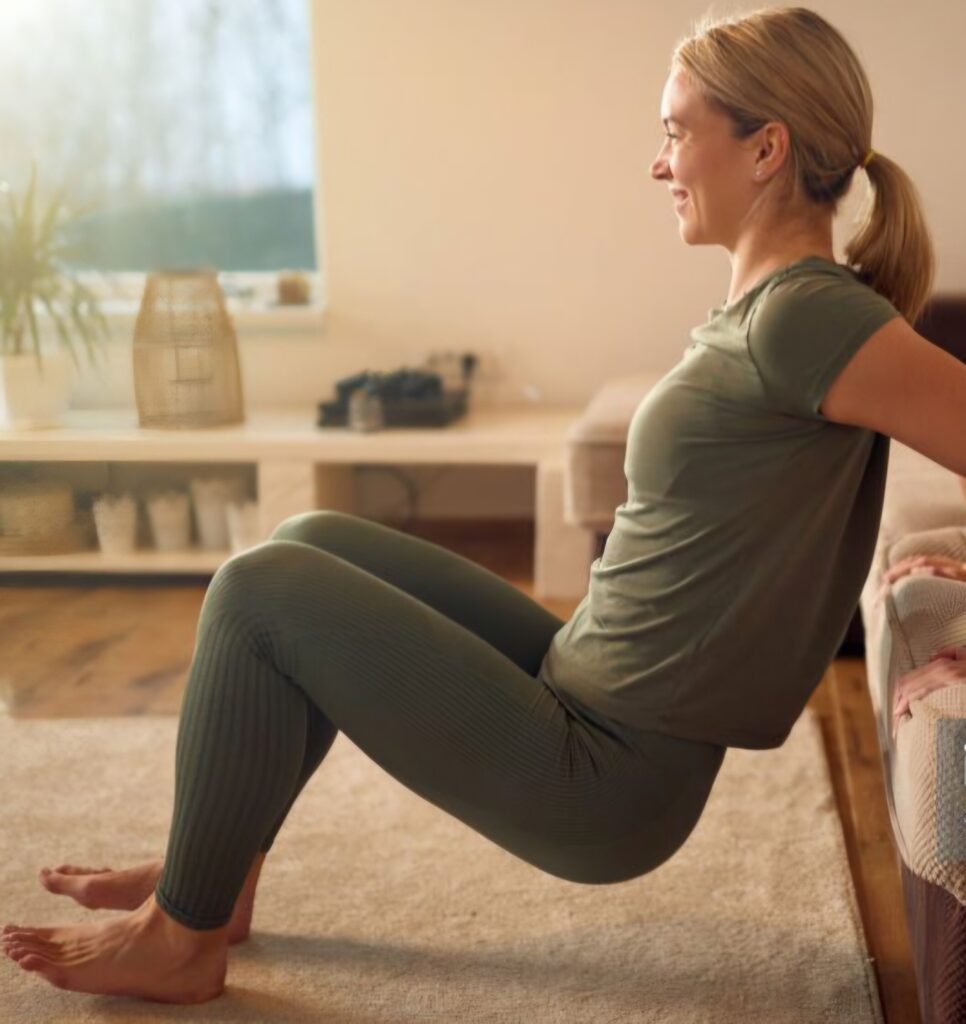
1. Tricep Dips (Using a Chair or Sofa)
The Move: Sit on the edge of a sturdy chair or couch. Place your hands next to your hips, scoot forward so your butt is off the seat, and lower your body by bending your elbows to 90°. Push back up.
The Detail: Find a stable surface like a chair or the edge of your bed. With your hands behind you and feet extended, lower your hips toward the floor by bending only your elbows.
Keep your back close to the chair. If you move too far forward, you strain your shoulders.
Example: “Think of your arms as pistons, driving your body straight up and down.”
2. Pike Push-Ups
To get those “capped” shoulders without overhead presses, use the Pike Push-Up.
The Move: Start in a downward dog position (hips high in the air, body forming an ‘A’ shape). Lower the top of your head toward the floor between your hands, then push back up.
The Detail: This is a bodyweight version of an overhead press. It targets the shoulders (deltoids) specifically.
Example: “You are trying to look at the floor behind your hands as you lower your head.”
3. Superman Extensions
The Move: Lie face down on the floor with arms extended in front of you. Simultaneously lift your arms, chest, and legs off the floor. Hold for 2 seconds, then lower.
The Detail: This strengthens the entire “posterior chain” (lower back, glutes, and upper back), which is vital for posture.
Example: “Imagine you are flying through the sky like a superhero; keep your gaze toward the floor to protect your neck.”
To help you see results, perform these home workouts as a high-intensity circuit routine: execute each movement for 40 seconds to build functional strength, followed by 20 seconds of rest. Repeat this training loop 3 to 4 times for a complete full-body home workouts. To maximize your muscle endurance and safety, always prioritize proper form over speed throughout your daily exercise regimen to prevent injury.