Think of kitchen zoning as setting up “work stations” so you do not have to run marathons while making dinner. It’s an old idea called the “kitchen triangle” that focuses on the three spots you use most: the sink, the stove, and the fridge.
Here is the “cheat sheet” for a simpler kitchen:
The Sink Station (Prep & Clean): Keep your knives, cutting boards, and trash can here. You wash, chop, and scrap all in one move.
The Stove Station (Cooking): Keep your pots, pans, spatulas, and oils right next to the heat. If you need to stir or flip, you shouldn’t have to take a single step.
The Fridge Station (Storage): This is your “docking bay.” Keep your Tupperware and wraps nearby so leftovers go straight from the table to the fridge.
We’ve all been there: you’re in the middle of a complex recipe, the onions are beginning to burn, and you realize the spatula is buried under a pile of mail, while the colander is inexplicably stored in a cabinet across the room. It’s not a lack of cooking skill, it’s a failure of kitchen flow.
The secret to a stress-free kitchen is not necessarily more square footage—it’s zoning. By grouping tools and ingredients based on the specific tasks you perform, you transform your kitchen from a chaotic storage unit into a high-performance workshop.
When you work from home or manage demanding digital projects, your kitchen shouldn’t be a source of stress. For a long time, preparing a quick mid-day lunch felt like running a marathon because my tools were scattered everywhere. Setting up dedicated workstations didn’t just save my sanity—it completely optimized my daily workflow so I could cook, clean, and get back to my screen without wasting precious time.
Here is how to master the “Zone Defense” in your kitchen
1. The Prep Zone: The Engine Room
The Prep Zone is where the magic (and the mess) happens. This area should ideally be located between your sink and your stove, providing a clear stretch of countertop.
The Strategy: Keep your knives, cutting boards, and mixing bowls within arm’s reach. If you have to walk across the kitchen to grab a peeler, you’re losing momentum.
Pro Tip: Store your “everyday” spices here rather than in a distant pantry.
Gear Up: A Large Bamboo Cutting Board with Side Handles allows you to prep and transport ingredients easily. Pair it with a Magnetic Knife Strip to free up drawer space and keep your blades sharp and accessible.
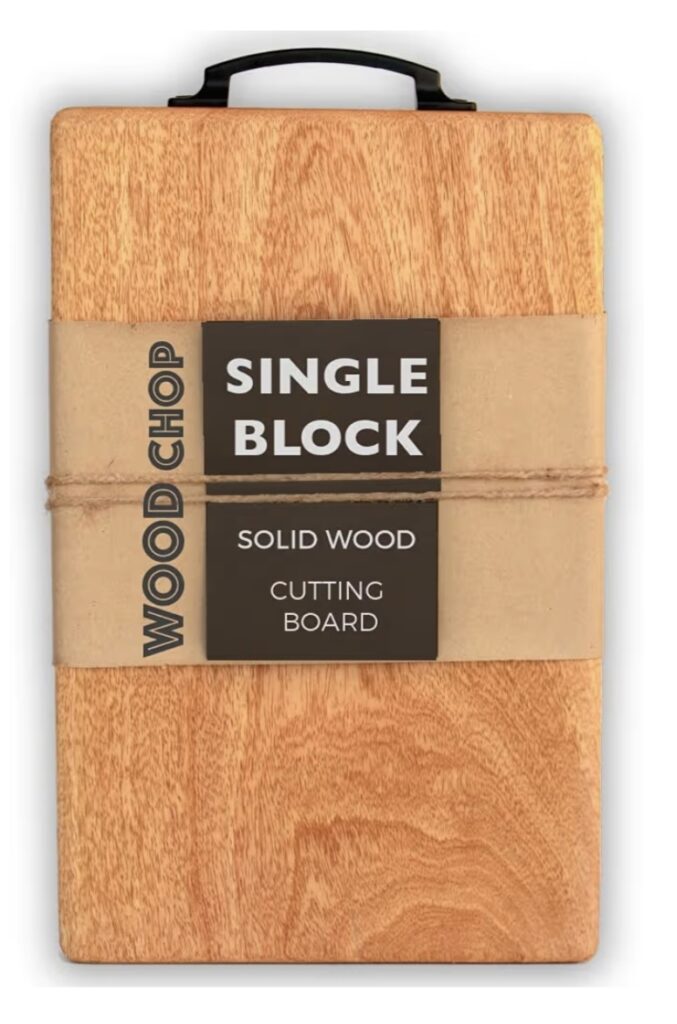
Trying to chop veggies on a tiny, sliding plate or a flimsy plastic sheet ruins your kitchen speed. Investing in a large, heavy solid wood block provides a permanent, stable prep area where you can slice everything in one efficient go.
2. The Cooking Zone: The Heat of the Moment
This zone centers around the stovetop and oven. Efficiency here is about safety and speed; you don’t want to be hunting for a potholder while a pot is boiling over.
The Strategy: Only items that can handle the heat belong here. Think spatulas, ladles, oils, and seasonings.
Organization Tip: Use “vertical storage” for baking sheets and pan lids to avoid the dreaded “clatter-stack” in the bottom cabinet.
Gear Up: A Stainless Steel Kitchen Utensil Holder keeps your most-used turners and whisks right next to the burner. For cabinet chaos, a Heavy-Duty Pan Organizer Rack is a total game-changer for visibility.
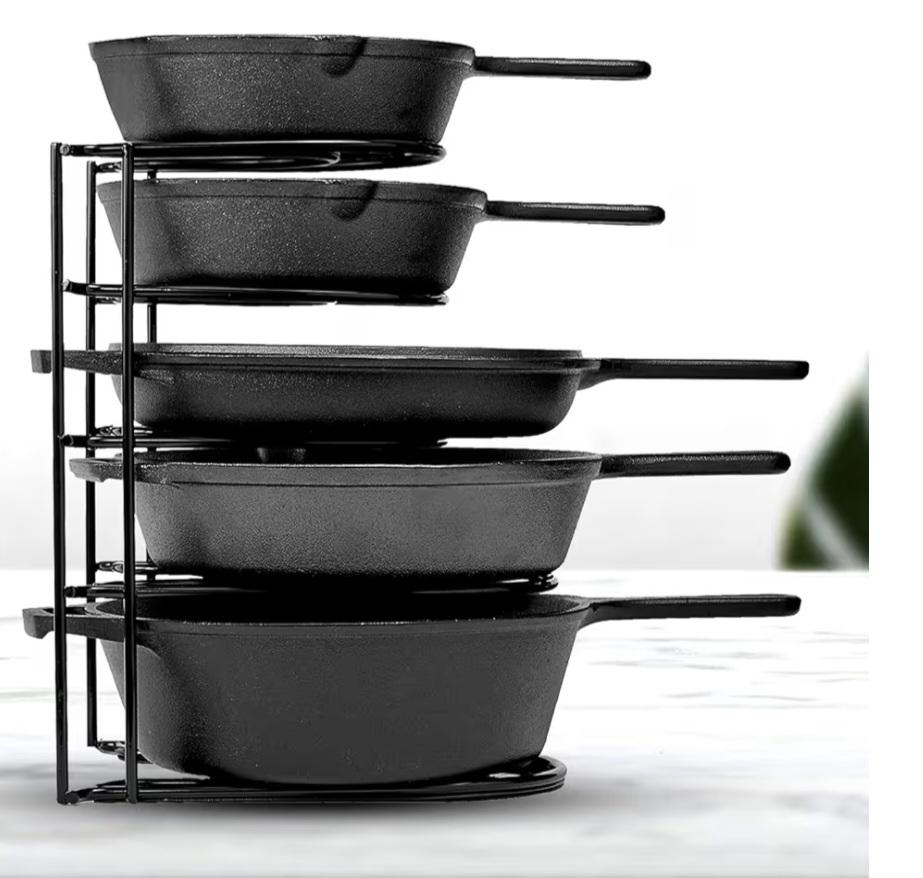
Nothing breaks your cooking momentum quite like a loud ‘clatter-stack’ of frying pans crashing out of a dark cabinet. A vertical pan rack keeps your essential skillets beautifully divided and instantly accessible.
3. The Cleaning Zone: The Exit Strategy
Centered around the sink and dishwasher, this zone is often the most cluttered. Between soggy sponges and a mountain of drying Tupperware, it’s the area that feels “messy” the longest in kitchen.
The Strategy: Store your dish soap, scrubbers, and dishwasher pods directly under or above the sink. This is also the logical place for your trash and recycling bins.
Pro Tip: Keep your everyday glassware and plates in the cabinets closest to the dishwasher for a faster “put-away” routine.
Gear Up: An Over-the-Sink Dish Drying Rack saves precious counter space in smaller kitchens. To tackle the dark abyss under the sink, try a Two-Tier Sliding Under-Sink Organizer.
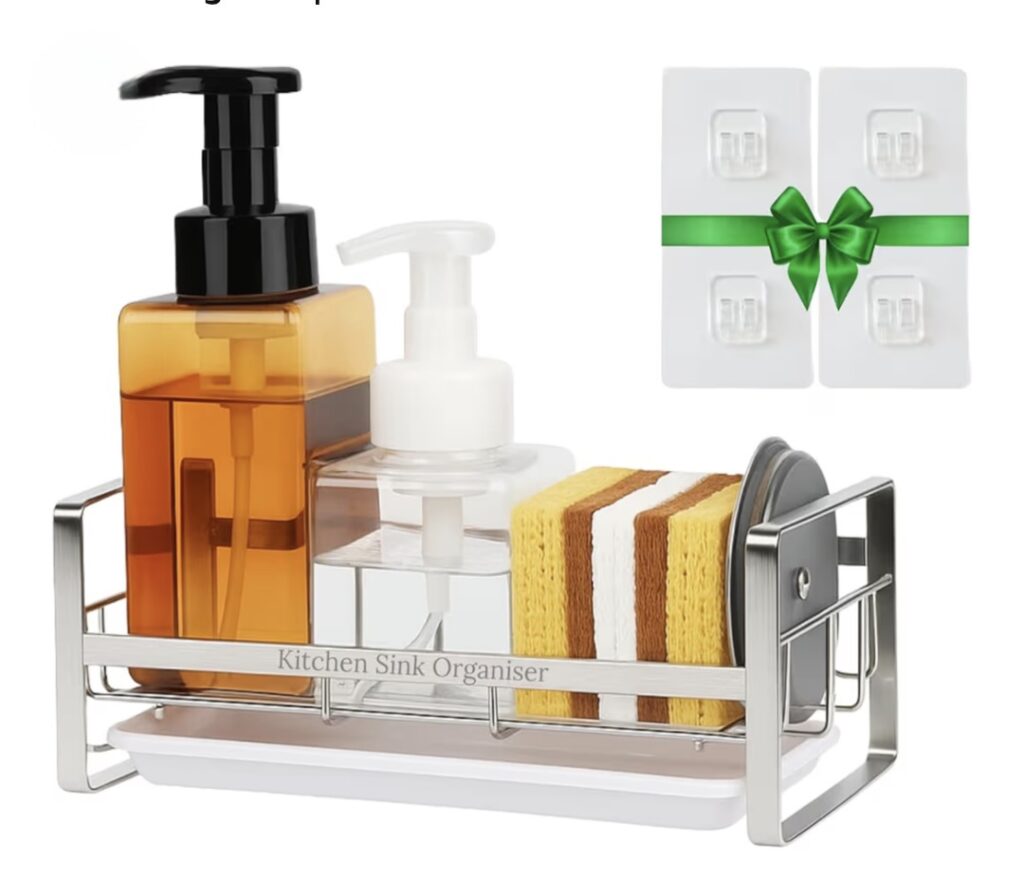
A cluttered sink area with soggy sponges and dripping soap bottles instantly makes a clean kitchen look chaotic. A dedicated countertop organizer keeps your cleaning tools dry, hygienic, and perfectly contained.
4. The Consumables Zone: The Fuel Depot
This is your pantry and refrigerator. The goal here is visibility. If you can’t see that third jar of cumin, you are going to buy a fourth.
The Strategy: Group like-items together. Baking supplies in one bin, snacks in another, and “dinner foundations” (pasta, grains) in a third.
Organization Tip: Use the “First In, First Out” (FIFO) method—place newer groceries behind older ones to reduce food waste.
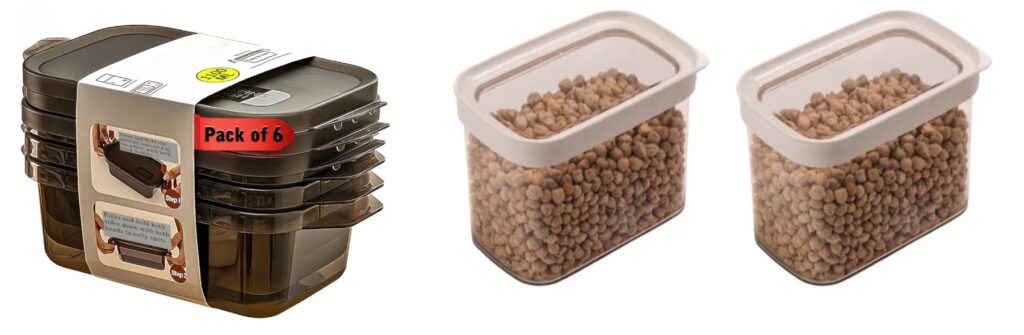
Gear Up: Airtight Food Storage Containers keep dry goods fresh and look much cleaner than mismatched boxes. For the fridge, Clear Plastic Stackable Bins let you see exactly how much yogurt or fruit you have left at a glance.
5. The Non-Consumables Zone: The Support Staff
This is for everything else: your “good” china, the slow cooker you use once a month, and the Tupperware.
The Strategy: Store items used daily at eye level. High-shelf real estate is reserved for the turkey roaster or the heavy stand mixer you only pull out for birthdays.
The Tupperware Rule: Match lids to containers before they go in the drawer. If a container doesn’t have a lid, it’s just clutter—toss it.
Gear Up: Use a Food Container Lid Organizer to stop the “Tupperware Avalanche” every time you open the cabinet.
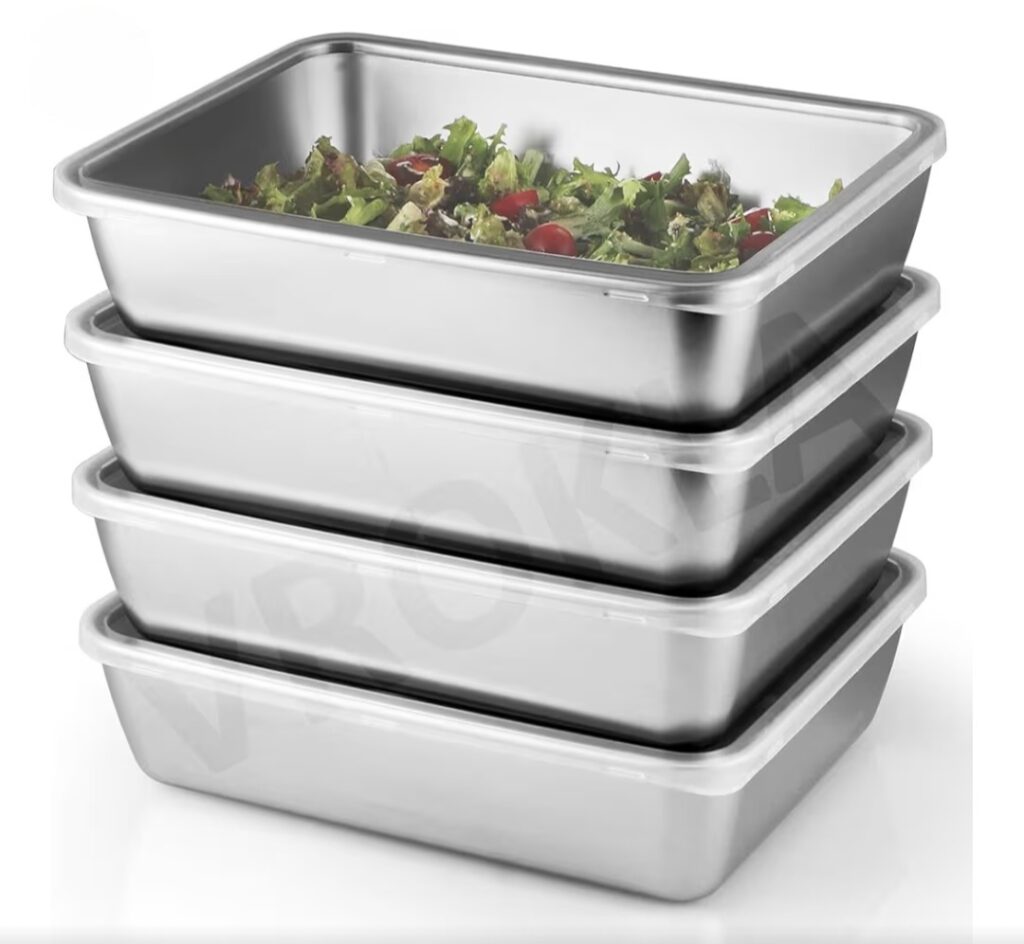
Mismatched cardboard boxes hide your ingredients, leading to expired food waste and double-buying at the grocery store. Clear, airtight containers let you track exactly what you have at a single glance.
6. The “Hidden” Sixth Zone: The Coffee & Beverage Station
If you find yourself constantly bumping into the person making toast while you are trying to brew coffee, you need a dedicated Beverage Zone. Move your coffee maker, mugs, and sugar away from the main cooking triangle. This stops people from getting in your way while you are making breakfast during busy mornings.
The Impact of an Organized Kitchen
| Feature | Before Zoning | After Zoning |
|---|---|---|
| Meal Prep Time | High (Searching for tools) | Low (Everything at hand) |
| Stress Levels | High (Clutter & Chaos) | Low (Predictable Flow) |
| Grocery Waste | Frequent (Items forgotten) | Minimal (Clear Visibility) |
| Cleaning Effort | Exhausting | Streamlined |
Zoning is not about having a “perfect” kitchen, it’s about creating a space that works for you instead of against you. Start small: pick just one area this weekend (the cleaning area is usually the most fun and rewarding), and you’ll notice how much easier and calmer your cooking feels.