If you feel like your attention span is shattering, committing to a digital detox can help you reclaim your productivity. Working in IT means I am surrounded by screens all day, and I realized I was spending my “rest time” also staring directly at a mobile screen. To break this cycle, I tried a 7-day challenge where I put my phone in a different room completely after 9:00 PM. The first two days were genuinely hard, but by day four, I felt a sense of calm I hadn’t felt in years.
Smartphone addiction is a physiological reality driven by dopamine loops designed to keep you hooked. Starting a structured digital detox isn’t about completely giving up technology; it’s about shifting from reactive scrolling to intentional use.
📊 7-Day Digital Reset Strategy
▫ Phase 1 (Days 1–2): Audit your screen metrics and eliminate non-human notifications to silence the noise.
▫ Phase 2 (Days 3–5): Build physical speedbumps and design tech-free zones around your living space.
▫ Phase 3 (Days 6–7): Reclaim deep focus by welcoming healthy boredom and finishing with a 24-hour fast.
Your 7-Day Digital Detox Roadmap
Day 1. Audit and Awareness
You can’t fix what you can not see. Before changing anything, look at the cold, hard facts.
Check the Stats: Go to “Screen Time” (iOS) or “Digital Wellbeing” (Android). Note your daily average and your most used apps.
Identity Triggers: Keep a small notebook. Every time you reach for your phone, jot down why. Are you bored? Stressed? In a waiting room?
The Goal: Just observe. Awareness is 50% of the cure.
Day 2. Muting the Noise
Smartphones are designed to scream for your attention. Today, you silence them.
Kill Notifications: Turn off all non-human notifications. If it’s not a text or call from a real person, you do not need a buzz for it.
Clean the Home Screen: Move “slot machine” apps (Instagram, TikTok, News) off your first page and into folders.
Greyscale Mode: Switch your screen to black and white (usually in Accessibility settings). This makes the vibrant icons and photos far less rewarding to the brain.
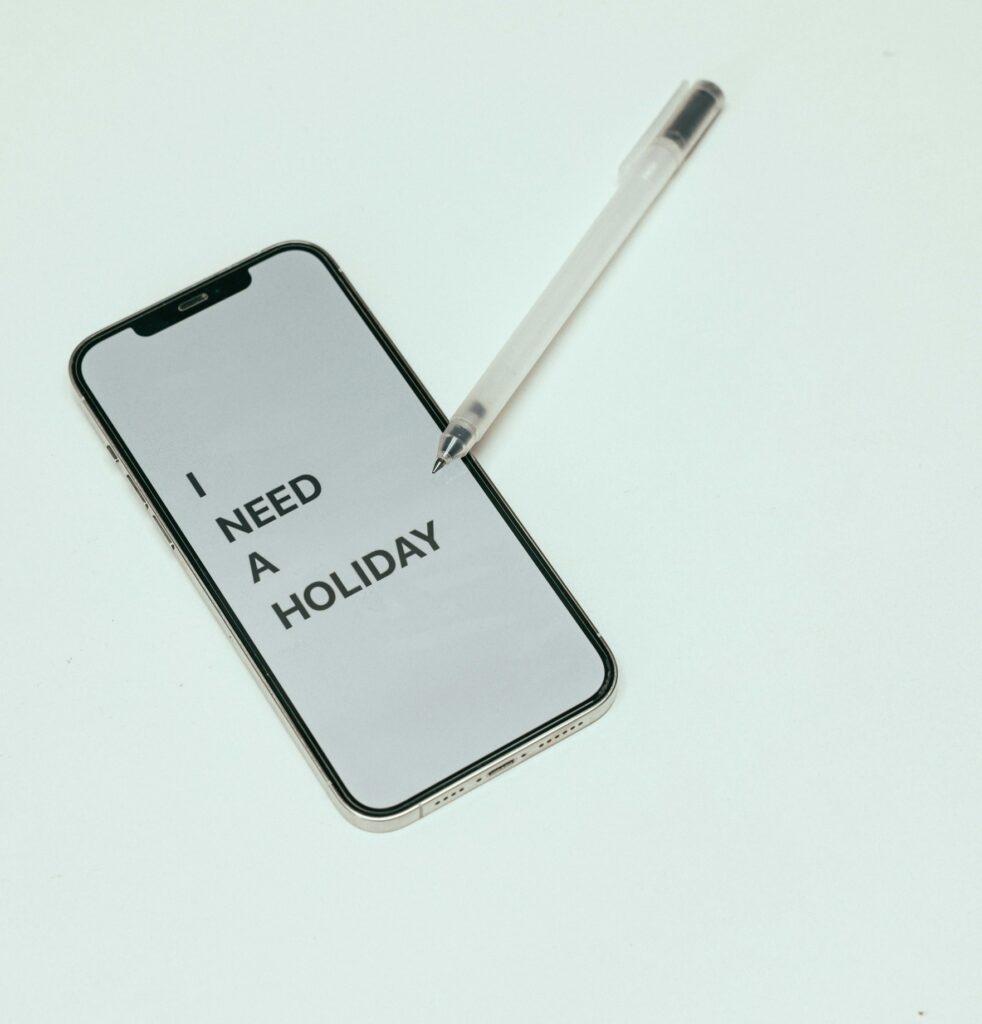
Day 3. Creating Physical Speedbumps
Make it physically harder to use your smartphone during a digital detox.
The Hairband Trick: Put a thick rubber band around the middle of your phone. It creates a physical barrier that forces you to be mindful every time you try to swipe.
Charge Outside the Bedroom: Buy a cheap, analog alarm clock. Your phone no longer enters the bedroom.
The “Out of Sight” Rule: When you walk through your front door, put your phone in a dedicated “dock” or drawer. Only check it intentionally, do not carry it in your pocket.
Day 4. Reclaiming Your Morning
The first hour of your day sets the tone for your brain’s “reward” seeking.
No-Phone Mornings: Do not touch your phone for the first 30–60 minutes after waking up.
Replacement Activity: Replace the morning scroll with something tactile: making coffee, stretching, or reading 5 pages of a physical book.
Day 5. Designating Tech-Free Zones
Establish “Sacred Spaces” where the phone is strictly prohibited.
The Dinner Table: No phones during meals, whether you’re alone or with others. Savor your food.
The Bathroom: Leave the phone outside. This is a major “phantom” time-sink for most people.
The “Waiting Room” Challenge: If you’re in a line or a waiting room, resist the urge to pull out the phone. Practice people-watching or just being with your thoughts.
Day 6. The “Boredom” Threshold
We use phones to escape the slightest hint of boredom. But boredom is actually the gateway to creativity and problem-solving. When we numb boredom with scrolling, we kill our ability to think deeply.
The Challenge: Today, when you find yourself waiting—in a grocery line, at a doctor’s office, or for a friend—do not pull out your phone. * The Result: You will feel a “phantom itch.” Sit with it. Let your mind wander. This is your brain’s default mode network coming back online. This is where your best ideas are born.
Day 7: The 24-Hour Digital Fast
The final step of this digital detox is the most challenging but the most rewarding. Today, you turn your phone off completely for 24 hours.
Preparation: Tell your family and friends the night before that you will be “off-grid” for a day so they don’t worry.
The Experience: You may feel anxious or “disconnected” at first. This is a negative withdrawal symptom of smartphone addiction. However, by the afternoon, a strange thing happens: the world slows down. Your focus sharpens. You will find you have significantly more time than you realized.
Life Beyond the Screen
Completing a digital detox is not about becoming a hermit, it is about making sure your tools serve you, rather than you serving them. After these 7 days, you shouldn’t go back to your old ways. Keep the greyscale on. Keep the phone out of the bedroom.
By reclaiming your attention, you are not just saving time—you are saving your life. You are choosing to be present for the people you love and the work that actually matters.