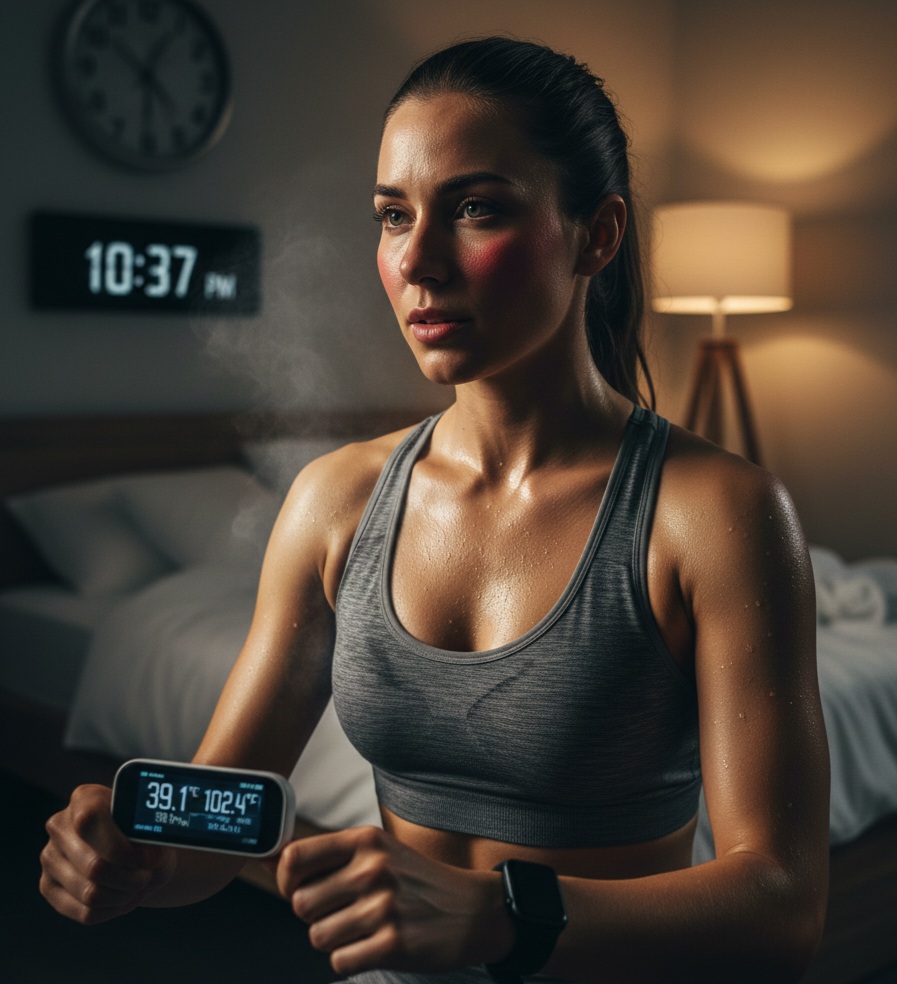
Have you ever wondered why you continue to radiate heat long after a tough evening workout? While physical activity is incredible for your fitness, it triggers a dramatic thermal shift. Every movement you make is fueled by metabolic energy, forcing your body temperature to climb from its baseline of 37°C up to 39°C or higher during intense training.
To sleep deeply, your biology requires the exact opposite response. Your body naturally cools down by shedding heat through sweat evaporation and increased surface blood flow. When late-night exercise artificially pushes your internal temperature up, it directly disrupts your brain’s ability to trigger vital sleep hormones like melatonin.
Core Summary: How Body Heat Affects Your Sleep
▪ The Problem: Intense late-night workouts act as an “internal furnace,” delaying your body’s natural pre-sleep cooling process.
▪ The Sleep Block: Elevated core temperatures trick your brain into staying alert, triggering restless nights and insomnia.
▪ The Golden Rule: Try to finish high-intensity workouts at least 3 to 4 hours before your target bedtime to allow a complete thermal reset.
The Cooling System: How to Manage Elevated Body Temperatures
To maintain a safe internal environment, the body employs two primary cooling strategies:
Vasodilation (The Radiator Effect): Your heart pumps more blood toward the surface of your skin. This is why you look flushed or red during a workout. By moving hot blood away from the core and toward the skin, the body allows heat to escape into the environment through radiation and convection.
Evaporative Cooling (The Sweat Mechanism): This is the body’s most effective weapon. Eccrine glands release moisture onto the skin. As the air evaporates this liquid, it absorbs a massive amount of thermal energy from your body.
💡 Expert Hydration Tip: Evaporative cooling only works efficiently if your body has enough fluid reserves. Drinking 250–500 ml of water before your workout starts guarantees your internal cooling system has enough fuel to regulate your temperature cleanly.
Note: In high humidity, this process fails because the air is already saturated with moisture, which is why working out in humid weather feels significantly more exhausting.
The “Afterburn” and Evening Workouts
The rise in temperature doesn’t stop the moment you put down the weights. It takes time for your “internal engine” to cool down. This is why a proper cool-down period is vital.
This post-exercise heat is also why evening workouts can be problematic. Your body naturally needs its core body temperature to drop to trigger the release of melatonin and initiate sleep. If you finish a high-intensity interval training (HIIT) session at 8:00 PM, your body may still be “running hot” at 10:00 PM, leading to restlessness or insomnia.
Environmental Factors: Heat vs. Cold
How you experience this temperature shift depends heavily on your surroundings:
- In the Heat: Your heart has a “double burden.” It must pump blood to the muscles for movement and to the skin for cooling. This leads to a higher heart rate at lower intensities.
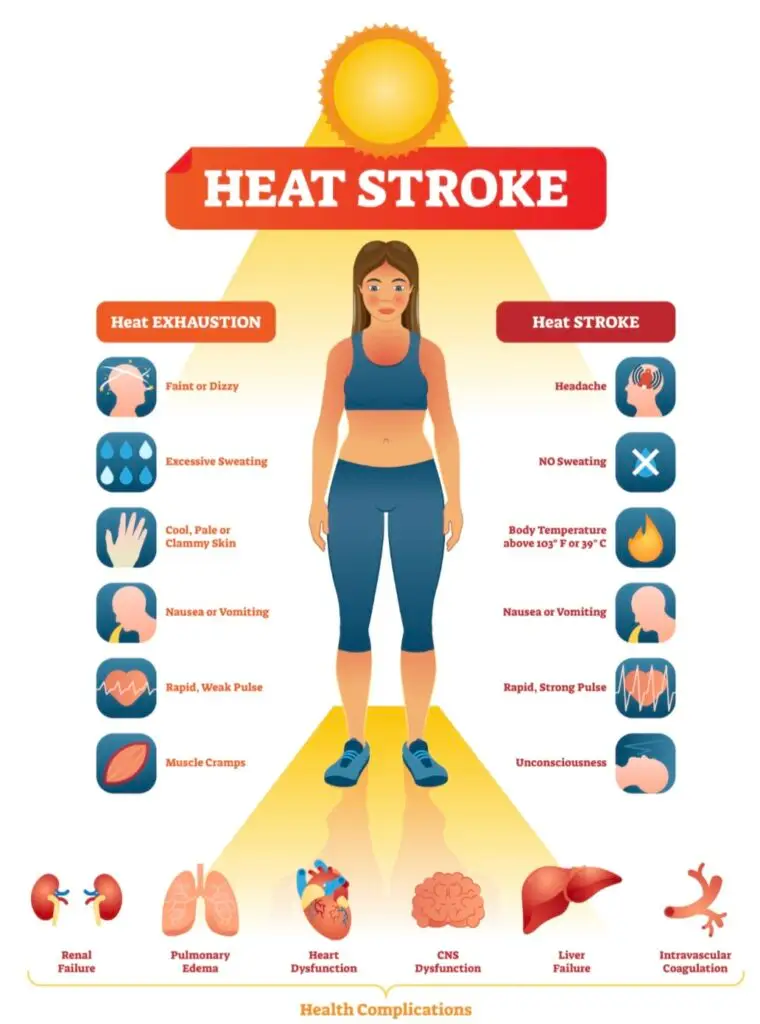
When the “double burden” of heat and exercise becomes too much, your body will send emergency signals. If you experience any of the following, stop immediately and find shade:
▪ ❌ The Absence of Sweat: If your skin becomes hot and dry while you are still working hard, your cooling system has crashed—this is a medical emergency.
▪ 🤢 Dizziness or Nausea: Clear warning signs that your brain is not getting the optimal blood flow it needs.
▪ 🤕 Throbbing Headache: A major symptom of significant dehydration and rapidly rising core temperatures.
- In the Cold: While you still produce the same metabolic heat, the environment helps dissipate it faster. However, if you stop moving while sweaty, the rapid evaporation can lead to a dangerous drop in temperature (chills).
Understanding how exercise affects your body temperature is key to unlocking better performance, recovery, and long-term safety. Your muscles generate heat like a metabolic furnace during workouts, driving up core temperature to fuel energy production—but without proper management, this can lead to fatigue, cramps, or heat exhaustion. By staying hydrated to support efficient sweating (your body’s natural cooling system), dressing in breathable fabrics, and timing sessions for cooler parts of the day, you create the perfect conditions to harness that inner fire.
Don’t forget the cool-down: A gradual wind-down with light stretching or walking allows your temperature to normalize, reduces injury risk, and enhances muscle repair. Listen to your body—symptoms like dizziness or excessive sweating signal it’s time to pause and refuel. Embrace these strategies, and you’ll not only avoid getting burned but transform every sweat session into a step toward peak vitality and resilience.
“Do you prefer morning or evening workouts? Tell us how you handle the ‘afterburn’ in the comments!”
Nice content.. 👍
“Thank you for reading, Rahul!”