Yoga means union. It offers a powerful, natural solution to flip the switch back to “rest and digest.”
Yoga traces back over 5,000 years to ancient Indian traditions, rooted in Sanskrit texts like the Yoga Sutras of Patanjali. The term derives from “yuj,” meaning to yoke or unite, aiming for harmony between individual consciousness and the universe .
Core elements include asanas (postures for strength and flexibility), pranayama (breath control), and dhyana (meditation for mental clarity). These build progressively toward samadhi, a state of profound inner peace
Today, Yoga emphasizes physical health benefits like improved flexibility, stress reduction, and emotional balance, often adapted in the West as exercise. Styles range from gentle Hatha to dynamic Vinyasa, suitable for all fitness levels.
Key Highlights of Yoga:
The Science of Calm: How gentle stretching stimulates the Vagus nerve.
Accessible Healing: Poses that anyone can do, regardless of flexibility.
Daily Restoration: A routine that fits into even the busiest schedules.
7 Yoga postures given below:
1. Child’s Pose (Balasana)
This is the ultimate “rest” pose. It gently stretches your lower back and hips while quieting the mind by drawing your focus inward.
How to do it: Kneel on the floor, sit on your heels, and fold forward until your forehead touches the mat. Extend your arms out in front or rest them by your sides.
Why it works: It mimics a fetal position, which provides a psychological sense of safety and grounding.
2. Legs-Up-The-Wall (Viparita Karani)
This is a restorative powerhouse that requires zero flexibility.
How to do it: Sit sideways against a wall, then swing your legs up onto the wall as you lie back. Keep your hips close to the baseboard.
Why it works: It facilitates lymphatic drainage and reverses the effects of gravity on your circulation, physically forcing your body into a “rest and digest” state.
3. Cat-Cow Stretch (Chakravakasana)
Stress often manifests as tension in the spine and neck.
How to do it: On all fours, inhale as you arch your back and look up (Cow), then exhale as you round your spine like a cat (Cat).
Why it works: Synchronizing breath with movement helps synchronize your heart rate and clears mental “fog.”
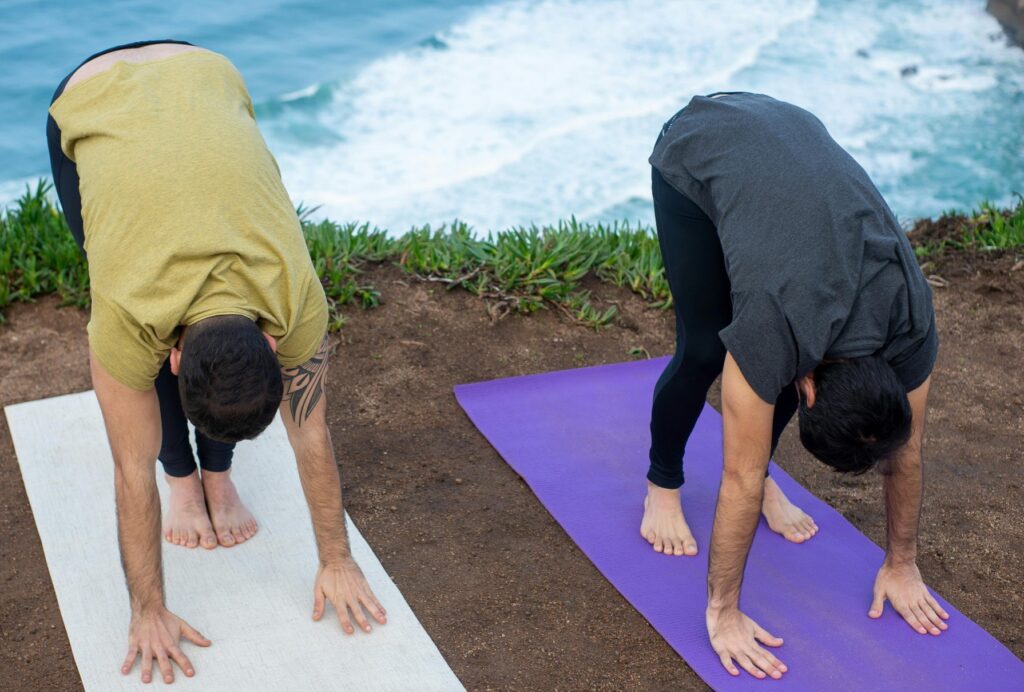
4. Forward Fold (Uttanasana)
By letting your head hang below your heart, you encourage blood flow to the brain.
How to do it: Stand with feet hip-width apart and fold forward at the hips. Keep a generous bend in your knees so your belly rests on your thighs.
Why it works: It physically releases the hamstrings and lower back, areas where we “grip” when we are anxious.
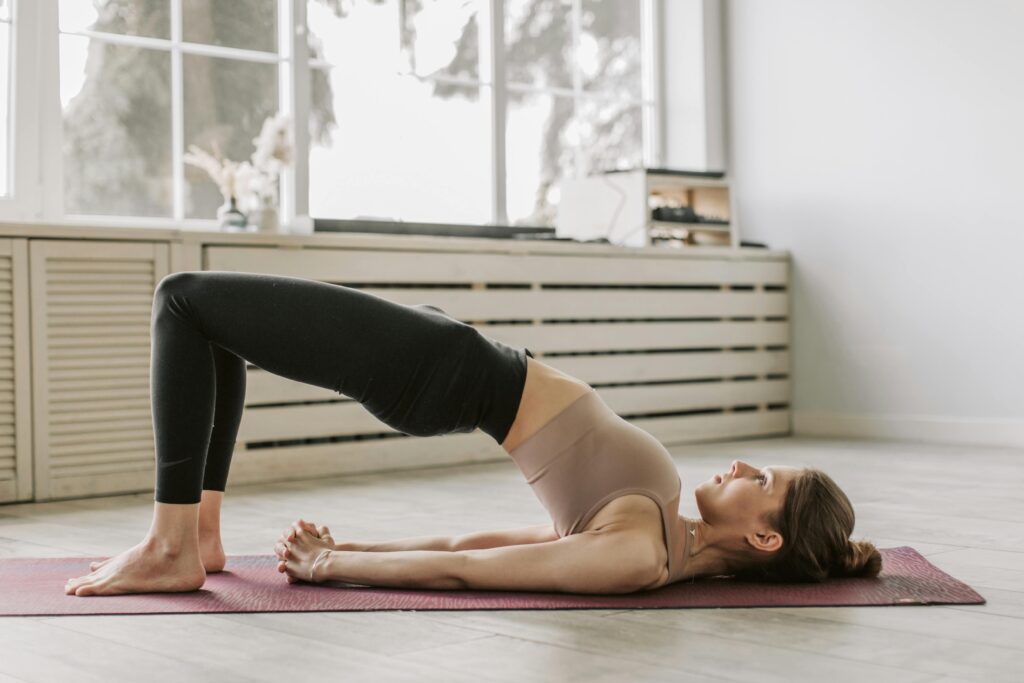
5. Bridge Pose (Setu Bandha Sarvangasana)
This pose of Yoga is great for opening the chest and shoulders—areas that usually hunch forward when we’re stressed at a desk.
How to do it: Lie on your back, bend your knees, and lift your hips toward the ceiling. Keep your arms flat on the floor or interlace your fingers underneath you.
Why it works: It’s a mild inversion that helps reduce anxiety and can alleviate headaches.
6. Reclined Bound Angle (Supta Baddha Konasana)
This is a deep hip opener. In yoga philosophy, we are said to store emotional stress in our hips.
How to do it: Lie on your back, bring the soles of your feet together, and let your knees fall open to the sides.
Why it works: It opens the pelvic region and chest, encouraging deep, diaphragmatic breathing.
7. Corpse Pose (Savasana)
The most important pose of Yoga for stress relief. It’s about total stillness.
How to do it: Lie flat on your back, arms at your sides, palms facing up. Close your eyes and focus only on your breath.
Why it works: It allows your nervous system to integrate the benefits of the movement you just did and fully relax.
Incorporate these 7 essential Yoga poses into your daily routine, and you’ll do more than just stretch your muscles—you’ll be giving your nervous system the vital “reset” it deserves. Stress may be an unavoidable part of modern life, but it doesn’t have to control your well-being. By dedicating just 10 to 15 minutes a day to these mindful movements, you are choosing to prioritize your mental health and reclaim your inner peace.
When your nervous system is balanced, you will find it easier to fall into a deep, restorative sleep and wake up feeling truly refreshed. You’ll also notice a shift in how you eat and nourish your body, as a calm mind leads to more mindful choices and better digestion. By choosing to prioritize these poses, you are reclaiming your inner peace and setting the foundation for a healthier lifestyle.
Remember, Yoga isn’t about how flexible you are or how perfectly you can hold a pose, it’s about showing up for yourself and listening to your body’s needs. Whether you start your morning with a gentle Cat-Cow or end a long day with Legs-Up-The-Wall, each breath is a step toward a more balanced, bliss-filled life.
Roll out your mat, take a deep breath, and let the healing begin today.